

Ice Bath Benefits and Risks: What Influencers Do Not Tell You
- July 12, 2026
- Lifestyle
In recent years, many new health practices have become popular, with claims that they can improve mood, strengthen immunity, and speed up recovery. One of the most widely discussed practices is the ice bath, also known as cold-water immersion.
You may have heard about it from an influencer or athlete on social media and wondered whether the benefits of ice baths are real or whether this is simply another trend designed to attract attention.
The answer is not simple. Some ice bath benefits are supported by reasonable scientific evidence, particularly when cold-water immersion is used for post-exercise recovery. However, many other benefits promoted online remain unproven or exaggerated.
Here is what scientific research says, away from the social media hype.

Dr. Zena Kalaji
Writer
A dentistry student and wellness writer focused on how everyday preventive habits impact confidence and health.
Reviewed by Dr. Suleiman Atieh
Last updated: June 28, 2026
Table of Contents
This article is for educational purposes only and is not a substitute for professional medical advice.
What Is an Ice Bath?
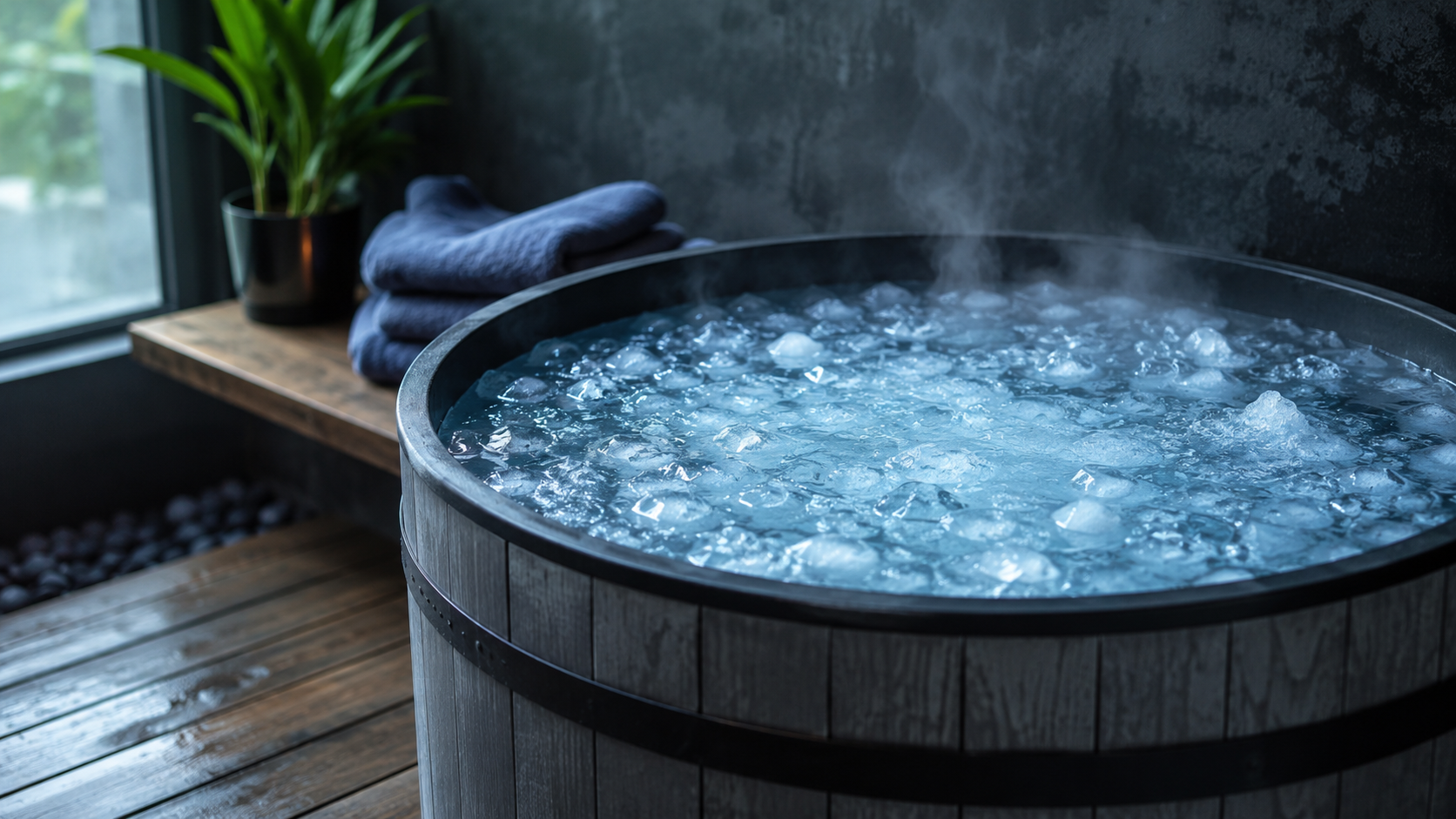
An ice bath, scientifically known as cold-water immersion, involves exposing a large part of the body to cold water, usually up to the chest or neck.
Studies commonly use water at temperatures of 15°C or lower, although the temperature and duration vary considerably between studies.
Cold-water immersion was once mainly used by professional athletes, but it has now developed into a widespread wellness trend among the general public.
What Ice Bath Benefits Are Supported by Science?
1. Reducing Muscle Soreness After Exercise
Reducing delayed-onset muscle soreness is one of the most strongly supported ice bath benefits.
Delayed-onset muscle soreness usually appears 24 to 48 hours after intense or unfamiliar exercise. It is especially common after activities involving eccentric muscle contractions, where the muscles contract while lengthening, such as downhill running or certain resistance exercises.
A systematic review and meta-analysis published in 2025, which included 55 randomized trials, found that certain cold-water immersion protocols helped reduce delayed-onset muscle soreness and improve some measures of post-exercise recovery.
The best results for soreness reduction were seen in studies using water temperatures between 11°C and 15°C for approximately 10 to 15 minutes.
Lowering tissue temperature and narrowing the blood vessels may reduce nerve conduction speed and decrease the sensation of pain. Cold exposure may also influence blood flow, fluid accumulation, and inflammatory substances within muscle tissue.
However, the exact mechanisms are still being studied, and individual responses can vary.
It is also important to distinguish between feeling less sore and achieving complete tissue recovery. A person may temporarily feel better without the muscles necessarily being ready for another intense workout.
2. Reduced Absence From Work Due to Illness
One of the most common claims is that cold water strengthens immunity and prevents illness. However, the research findings are more complicated than this claim suggests.
In a large Dutch trial involving 3,018 people, participants finished their daily shower with 30 to 90 seconds of cold water for 30 consecutive days.
The cold-shower groups reported a 29% reduction in absence from work due to illness compared with the control group.
However, the study did not find a clear reduction in the actual number of days participants felt ill. This means that participants were absent from work less often, but they did not necessarily experience fewer days of illness.
The study also tested cold showers, not full ice baths. Therefore, its results cannot prove that ice baths prevent infections or significantly strengthen immunity.
The findings were also based on self-reported information, which means factors such as motivation, resilience, or willingness to work while feeling unwell may have influenced the results.
3. Reducing Stress, but Not Immediately
An ice bath may feel extremely stressful while you are in it, which is consistent with the body’s natural response to sudden cold exposure.
A systematic review published in 2025 found no clear reduction in stress immediately after cold-water immersion or one hour later.
However, a noticeable reduction in stress appeared approximately 12 hours after immersion. The difference was no longer clearly present after 24 or 48 hours.
These findings suggest that the potential effect on stress may be delayed and temporary rather than an immediate feeling of relaxation, as it is sometimes presented online.
The available evidence also included only a limited number of studies with relatively small sample sizes. Therefore, ice baths should not be considered a treatment for anxiety or chronic stress.
4. Better Sleep and Quality of Life: Preliminary Evidence Only
One small study found improvements in sleep quality among men who used cold-water immersion after exercising in hot conditions for five consecutive days.
However, the study included only men and was conducted within a specific athletic setting. Its findings cannot automatically be applied to women or the general population.
This does not mean that ice baths cannot benefit women’s sleep. It simply means that the available evidence has not studied this question sufficiently.
The Dutch cold-shower trial also reported a small improvement in the mental-health component of quality of life after 30 days. However, the difference was modest and was no longer clearly present after 90 days.
For this reason, the possible benefits of ice baths for sleep and quality of life should be described as promising but uncertain.
5. Medical Use for Exertional Heatstroke
Cold-water immersion is medically used to treat exertional heatstroke, a life-threatening emergency that may occur in athletes or people working in very hot environments.
First-aid guidelines from the American Heart Association and the American Red Cross recommend starting active cooling quickly when heatstroke is suspected while emergency medical services are contacted.
Immersing the body from the neck down in cold water is one of the most effective ways to rapidly reduce core body temperature in this situation.
However, this emergency medical use is completely different from recreational ice bathing. Cold-water immersion should never delay contacting emergency services or obtaining professional medical care.
What Ice Baths Do Not Do According to Current Evidence
There Is No Strong Evidence That Ice Baths Improve Mood
Some people report feeling more alert or refreshed after exposure to cold water. However, the 2025 systematic review did not find clear improvements in mood measurements compared with normal recovery.
Positive feelings may also be influenced by other factors, including a sense of achievement, participating in the activity with a group, or spending time in nature.
The cold water itself may not be solely responsible.
Ice Baths Do Not Cause an Immediate, Proven Boost in Immunity
The systematic review found no meaningful change in immune markers immediately after cold-water immersion or one hour later.
The certainty of this evidence was also considered low because the studies were inconsistent and generally involved small groups of participants.
Ice baths should not be presented as a replacement for sufficient sleep, balanced nutrition, regular physical activity, vaccination, or appropriate medical care.
There Is No Strong Evidence That Ice Baths Increase Testosterone
Cold showers and ice baths are sometimes promoted as a natural way to increase testosterone.
However, a small study published in 2026 involving 11 male athletes found no consistent or statistically significant increase in salivary testosterone after four days of cold showers.
Because the study was small and short, it cannot prove that cold exposure has absolutely no effect. However, it does not support the strong claims commonly promoted online.
Do Ice Baths Increase or Reduce Inflammation?
Research findings on inflammation may initially appear contradictory.
A 2025 review found an increase in certain inflammatory markers immediately after cold-water immersion and one hour later.
This may represent an acute stress response or metabolic changes triggered by sudden cold exposure.
In contrast, other sports studies suggest that certain markers of inflammation or muscle damage may decrease at later points after exercise.
These differences may depend on several factors, including:
- The type of exercise
- The water temperature
- The immersion duration
- The timing of blood or biomarker testing
- The participant’s fitness level
Therefore, saying that ice baths simply “stop inflammation” is an inaccurate oversimplification.
A Warning for Athletes: Faster Recovery May Come at a Cost
Ice baths can reduce muscle soreness and help athletes feel as though they have recovered more quickly. However, they may not be suitable after every resistance-training session.
A systematic review and meta-analysis published in 2024 found that regularly using cold-water immersion immediately after resistance exercise may reduce muscle-growth adaptations.
Other analyses have suggested that frequent post-exercise cold-water immersion may also negatively affect long-term strength development.
This may occur because some of the inflammatory processes and cellular signals reduced by cold exposure also contribute to muscle adaptation and growth after exercise.
Athletes may therefore face a trade-off between two goals:
- Reducing soreness and restoring performance quickly
- Maximizing long-term muscle growth and training adaptation
Cold-water immersion may be more useful for an athlete who needs to compete or perform again within a short period.
It may be less suitable after every workout when the main objective is building muscle.
Ice Bath Risks You Should Know About
Sudden exposure to cold water can trigger what is known as the cold-shock response.
This response may include:
- Involuntary gasping
- Rapid breathing
- An increased heart rate
- A sudden rise in blood pressure
Cold shock can place additional strain on the heart. Gasping may also become dangerous if the head is submerged or water enters the airway.
With continued exposure, cold water may lead to loss of strength, reduced coordination, or a dangerous drop in body temperature.
Medical advice is particularly important before cold-water immersion for people with:
- Heart disease or heart-rhythm disorders.
- Uncontrolled high blood pressure.
- Raynaud’s phenomenon or poor circulation.
- Diabetes, especially when sensation in the hands or feet is reduced.
- Peripheral neuropathy.
- Cold-related conditions or cold allergies.
- Pregnancy.
- Use of medications that affect heart rate or blood pressure.
Reliable medical sources recommend that people with these conditions obtain medical guidance before considering cold-water immersion.
The activity should be stopped immediately, and medical help should be sought if symptoms such as chest pain, severe breathing difficulty, dizziness, confusion, increasing numbness, or loss of movement control occur.
What Do Research Protocols Tell Us?
Water temperatures and immersion durations vary significantly between studies. For this reason, there is no single proven ice bath protocol that is suitable for everyone.
In sports-recovery research, immersion for 10 to 15 minutes in water between 11°C and 15°C was associated with the best results for delayed-onset muscle soreness.
However, most participants were athletes or physically active individuals, and women were underrepresented. This limits how widely the findings can be applied.
The study on absence from work used cold showers lasting 30, 60, or 90 seconds and found no clear difference between the three durations.
This does not mean that 30 seconds provides all the benefits attributed to ice baths. It only describes one study protocol and one specific outcome.
These numbers describe research conditions and should not automatically be treated as home-use recommendations.
Safety depends on age, health status, medication use, fitness level, and previous adaptation to cold exposure.
Conclusion: Are Ice Baths Worth Trying?
Ice baths are not a complete myth, but they are also not the miracle solution often presented on social media.
There is reasonably good evidence that cold-water immersion can reduce delayed-onset muscle soreness and improve the feeling of recovery after intense exercise.
Cold-water immersion is also used medically to help cool people experiencing exertional heatstroke.
However, the evidence remains limited regarding sleep, stress, and quality of life. There is also no strong evidence that ice baths improve mood, increase testosterone, or immediately strengthen immunity.
Regular use after strength training may interfere with muscle-building goals. Cold shock may also create genuine risks for people with heart conditions, circulation problems, or other medical concerns.
The most important rule is not to assume that intensity equals effectiveness.
A practice that feels extreme or is popular among influencers is not necessarily more beneficial or safer.
FAQ
Are Ice Baths Beneficial After Exercise?
Cold-water immersion may help reduce delayed-onset muscle soreness and improve the feeling of recovery after intense exercise.
However, it does not guarantee complete tissue recovery and may not be suitable after every resistance-training session.
Do Ice Baths Strengthen the Immune System?
There is no strong evidence of an immediate immune boost.
One study found reduced absence from work among cold-shower users, but it did not find a reduction in the actual number of days participants felt ill.
Can Ice Baths Improve Sleep?
A small study found better sleep quality among men after training in hot conditions.
However, the evidence remains limited and cannot yet be applied to everyone.
Do Ice Baths Increase Testosterone?
There is no strong human evidence proving that they do.
A recent small study found no consistent increase in salivary testosterone after cold showers.
Are Ice Baths Safe for People With Heart Conditions?
Cold shock can quickly increase heart rate and blood pressure.
People with heart disease, heart-rhythm disorders, or high blood pressure should seek medical advice and avoid experimenting without professional approval.
Can Ice Baths Affect Muscle Growth?
Scientific reviews suggest that regularly using cold-water immersion immediately after resistance training may reduce some muscle-growth or strength adaptations over time.
References
- A 2025 systematic review and meta-analysis on the effects of cold-water immersion on health, stress, sleep, and immunity, published in PLOS One.
- A 2025 network meta-analysis of cold-water immersion protocols and recovery from exercise-induced muscle damage, published in Frontiers in Physiology.
- A 2016 randomized trial examining the effects of cold showers on health and absence from work, published in PLOS One.
- A 2024 systematic review examining cold-water immersion and muscle growth following resistance training.
- First-aid guidelines from the American Heart Association and the American Red Cross regarding heatstroke and active cooling.
About the Author
A dentistry student and wellness writer focused on how everyday preventive habits impact confidence and health.
Dr. Zena Kalaji
Writer