

PCOS Is Now PMOS: Why the Name Changed and What It Means
- May 17, 2026
- Women’s Health
PCOS is no longer just about “cysts.” The new name, PMOS, reflects a deeper understanding of the condition as a hormonal and metabolic disorder that affects the whole body.

Celine Abdallah
Founder
Celine Abdallah brings a multidisciplinary background in health communication, project management, and strategic coordination. At إلَيَّ, she helps shape the platform with a thoughtful, collaborative, and human-centered approach.
Reviewed by Suleiman Atieh
Last updated: May 17, 2026
Table of Contents
This article is for educational purposes only and is not a substitute for professional medical advice.
Introduction
For years, many women knew the condition as PCOS, or Polycystic Ovary Syndrome. But recently, the name was changed to PMOS Polyendocrine Metabolic Ovarian Syndrome.
This change is more than just a medical update. It reflects a better understanding of what the condition really is: not simply a problem of “cysts” on the ovaries, but a complex condition involving hormones, metabolism, reproductive health, skin, weight, and emotional wellbeing.
According to the Endocrine Society, PMOS affects around 1 in 8 women, or more than 170 million women worldwide. The new name was developed through a global effort involving patient and professional organizations to improve awareness, diagnosis, and care.

Why Was the Name PCOS Changed?
The old name, Polycystic Ovary Syndrome, created a lot of confusion.
The word “polycystic” made many people think the condition was mainly about ovarian cysts. In reality, experts now emphasize that the so-called “cysts” are not always true abnormal cysts. They are often small follicles related to ovulation changes. Some people with the condition may not even have these ovarian features, while others may have hormonal and metabolic symptoms that are more important.
This misunderstanding sometimes led to delayed diagnosis, incomplete treatment, and a narrow focus on reproductive symptoms only. The new name, PMOS, helps shift attention to the full picture.
What Does PMOS Mean?
The new name explains the condition more clearly:
Polyendocrine means that more than one hormone system may be involved.
Metabolic highlights the connection with insulin resistance, weight changes, blood sugar regulation, and long-term metabolic health.
Ovarian keeps the link to reproductive and ovulation-related symptoms, but without making the condition sound like it is only about cysts.
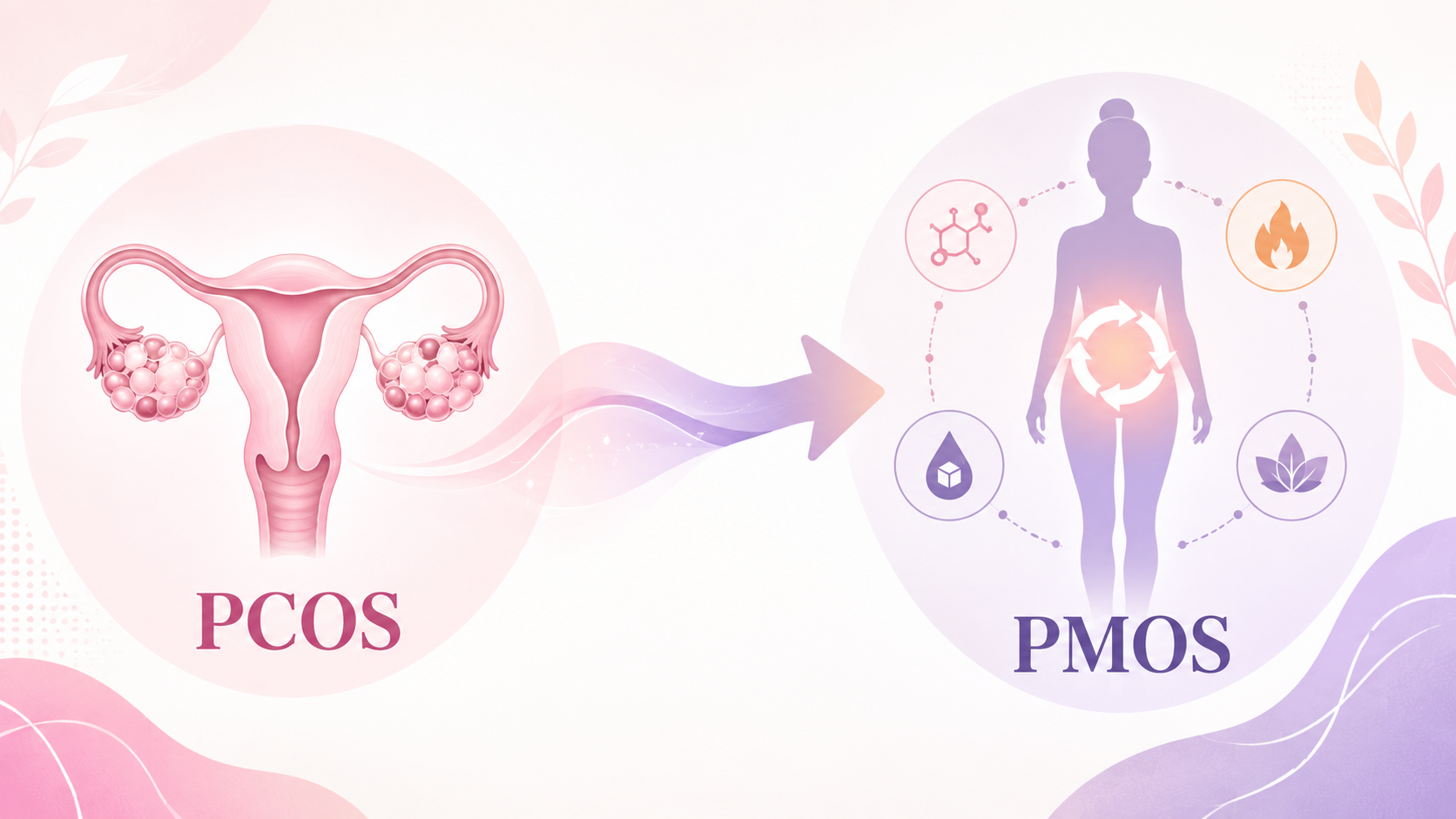
Together, PMOS gives a more accurate medical identity to the condition. It shows that this is not just a gynecological issue, but a whole-body endocrine and metabolic condition.
What Symptoms Can PMOS Cause?
PMOS symptoms can vary from one person to another. Some may have mild symptoms, while others experience more noticeable changes.
Common features may include irregular menstrual cycles, acne, excess facial or body hair, hair thinning, weight changes, insulin resistance, fertility challenges, and mood-related concerns. The condition can also be linked to metabolic risks such as type 2 diabetes and cardiovascular risk factors.
This is one of the main reasons the name needed to change. The old name did not reflect the wide range of symptoms and long-term health effects.
Does the Name Change Mean the Condition Has Changed?
No. The condition itself has not changed.
What changed is the way the medical community describes it. PMOS is the same condition previously called PCOS, but the new name better matches the current scientific understanding.
For now, diagnosis is still based on established clinical criteria. The 2023 International Evidence-based Guideline describes diagnosis using features such as hyperandrogenism, ovulatory dysfunction, and polycystic ovarian morphology or AMH in adults, after excluding other causes. In adolescents, diagnosis is more careful and requires both ovulatory dysfunction and hyperandrogenism.
Why This Name Change Matters
The shift from PCOS to PMOS matters because language affects care.
When a condition is misunderstood, patients may feel dismissed or confused. Some may be told they do not have the condition because they do not have visible ovarian cysts. Others may only receive treatment for irregular periods while their metabolic or hormonal health is not fully assessed.
The new name helps encourage a more complete approach. It may support better screening, more personalized treatment, and stronger awareness that PMOS can affect the body beyond fertility.
A global survey found that many patients and healthcare professionals supported changing the name because the old term did not reflect the broader health impact of the condition.
What Does This Mean for Women Diagnosed With PCOS?
For women already diagnosed with PCOS, the name change does not mean they need to start over or panic.
It simply means that the condition may now be referred to as PMOS in future medical discussions, articles, and guidelines. During the transition period, both names may still be used together so patients and healthcare professionals can recognize that they refer to the same condition.
The most important point is that PMOS should be managed based on each person’s symptoms, health goals, and risks. For some, the main concern may be menstrual regularity. For others, it may be acne, hair growth, fertility, insulin resistance, weight, or long-term metabolic health.
Final thoughts
The change from PCOS to PMOS is not just a rebrand. It is a step toward more accurate, respectful, and complete women’s health care.
PCOS sounded like a condition mainly about ovarian cysts. PMOS tells a bigger story: a condition involving hormones, metabolism, ovaries, skin, fertility, and overall wellbeing.
By changing the name, experts hope to reduce confusion, improve diagnosis, and help women receive care that looks at the whole body not just one symptom.
FAQ
Is PCOS the same as PMOS?
Yes. PMOS is the new name for the condition previously known as PCOS.
What does PMOS stand for?
PMOS stands for Polyendocrine Metabolic Ovarian Syndrome.
Why did they remove the word “cyst”?
Because the condition is not simply caused by ovarian cysts, and not everyone with the condition has cysts. The old name created confusion.
Does the treatment change because of the new name?
Not immediately. The name change mainly improves accuracy and awareness. Treatment should still be personalized based on symptoms and medical evaluation.
References
- Endocrine Society — PMOS name change announcement.
- 2023 International Evidence-based Guideline for PCOS assessment and management.
- Associated Press — PMOS name change and care explanation.
- CRE WHiRL — Renaming PCOS and global survey support.
- Verywell Health — PMOS transition and patient meaning.
About the Author
Celine Abdallah brings a multidisciplinary background in health communication, project management, and strategic coordination. At إلَيَّ, she helps shape the platform with a thoughtful, collaborative, and human-centered approach.
Celine Abdallah
Founder