

Biotin for Hair, Skin, and Nails: Helpful or Overhyped?
- July 4, 2026
- Nutrition & Vitamins
Biotin is one of the most popular ingredients in “hair, skin, and nails” supplements. It is often marketed as the vitamin that can make hair grow faster, nails stronger, and skin healthier.
But is biotin really that powerful, or has it been overhyped?
The honest answer is: biotin is important, but it is not magic. It can be very helpful when someone has a true biotin deficiency. However, for people who already get enough biotin from food, taking extra biotin may not lead to thicker hair, glowing skin, or stronger nails.
Biotin also has one important safety issue that many people do not know about: high-dose biotin supplements can interfere with certain blood tests and cause misleading results. The FDA has warned that biotin can significantly interfere with some lab tests, including troponin tests used in evaluating heart attacks.

Dr. Suleiman Atieh
Founder
Dr. Suleiman Atieh is a pharmacist and founder of إلَيَّ, with a strong passion for healthcare marketing, brand strategy, and business development. He focuses on building meaningful healthcare brands that connect science, market needs, and modern communication.
Reviewed by Celine Abdallah
Last updated: June 06, 2026
Table of Contents
This article is for educational purposes only and is not a substitute for professional medical advice.
What Is Biotin?
Biotin, also known as vitamin B7, is a water-soluble B vitamin. The body uses it to help convert food into energy and to support normal metabolism.
According to the NIH Office of Dietary Supplements, biotin functions as a coenzyme for carboxylases, which are enzymes involved in fatty acid synthesis, amino acid metabolism, and glucose production.
Biotin is naturally found in many foods, and the body also recycles some biotin. Because of this, true biotin deficiency is considered uncommon in people who eat a varied diet.
Why Is Biotin Linked to Hair, Skin, and Nails?
Biotin became famous in beauty supplements because deficiency can cause symptoms that affect hair, skin, and nails.
When someone is truly deficient in biotin, they may experience hair thinning, brittle nails, and skin changes. In these cases, correcting the deficiency can improve symptoms.
But this is where the confusion begins. Just because deficiency can cause hair or nail problems does not mean that extra biotin will improve hair, skin, or nails in people who are not deficient.
A review on vitamins and minerals in hair loss explains that biotin deficiency can cause hair loss, but there is no strong evidence-based data showing that biotin supplementation promotes hair growth in people without deficiency.
Does Biotin Help Hair Growth?
Biotin may help hair growth if hair loss is caused by biotin deficiency. But for most people, hair loss has other causes.
A review of biotin use for hair loss found 18 reported cases where biotin supplementation improved hair or nail growth, but all cases involved an underlying condition or pathology affecting hair or nail growth.
This means the benefit was mostly seen when there was a medical reason biotin was needed.
For healthy people without deficiency, there is not enough evidence to say that biotin makes hair grow faster or thicker. Hair growth depends on many factors, including genetics, hormones, iron levels, thyroid health, stress, nutrition, medications, scalp health, and hair-care habits.
Does Biotin Help with Hair Shedding?
Biotin is often taken when someone notices hair shedding, but shedding does not always mean biotin deficiency.
Hair shedding can happen because of:
Stress
Low iron or ferritin
Thyroid problems
Hormonal changes
PMOS/PCOS
Postpartum changes
Crash dieting
Low protein intake
Certain medications
Illness or fever
Scalp inflammation
Genetics
If the cause is not biotin deficiency, taking biotin may not solve the problem.
This is why persistent or sudden shedding should not be treated only with a beauty supplement. It is better to understand the reason first.
Does Biotin Make Nails Stronger?
Biotin may have more promising evidence for brittle nails than for general hair growth, but the evidence is still not strong.
The NIH notes that evidence for biotin supplementation in brittle nails comes from three small studies that did not include placebo groups.
This means some people with brittle nails may notice improvement, but the research is limited. Brittle nails can also be caused by frequent handwashing, harsh nail products, gel manicures, aging, nutritional deficiencies, thyroid disease, or repeated trauma.
Biotin may help some people, but nail care habits and overall health matter too.
Does Biotin Improve Skin?
Biotin deficiency can cause skin changes, but taking extra biotin does not automatically improve skin in people with normal biotin levels.
Healthy skin depends on many factors, including hydration, sleep, sun protection, hormones, barrier health, diet, inflammation, and skincare routine. Biotin is only one nutrient involved in normal body function.
There is no strong evidence that high-dose biotin gives clearer or more radiant skin in people who are not deficient.
Some people also report acne-like breakouts while taking high-dose biotin, although this is not fully established. If breakouts start after beginning a supplement, it may be worth stopping it and asking a healthcare professional.
What Are Signs of Biotin Deficiency?
True biotin deficiency is uncommon, but it can happen in certain situations.
Possible signs may include:
Hair thinning
Skin rash, especially around the eyes, nose, or mouth
Brittle nails
Conjunctivitis
Fatigue
Neurological symptoms in severe cases
Some people may be at higher risk, including those with biotinidase deficiency, people on long-term parenteral nutrition without biotin, people with certain digestive or absorption issues, and people who consume large amounts of raw egg whites over time. Raw egg whites contain avidin, a protein that binds biotin and can reduce absorption. The NIH notes that cooking denatures avidin, reducing this issue.
Food Sources of Biotin
Most people can get biotin from food.
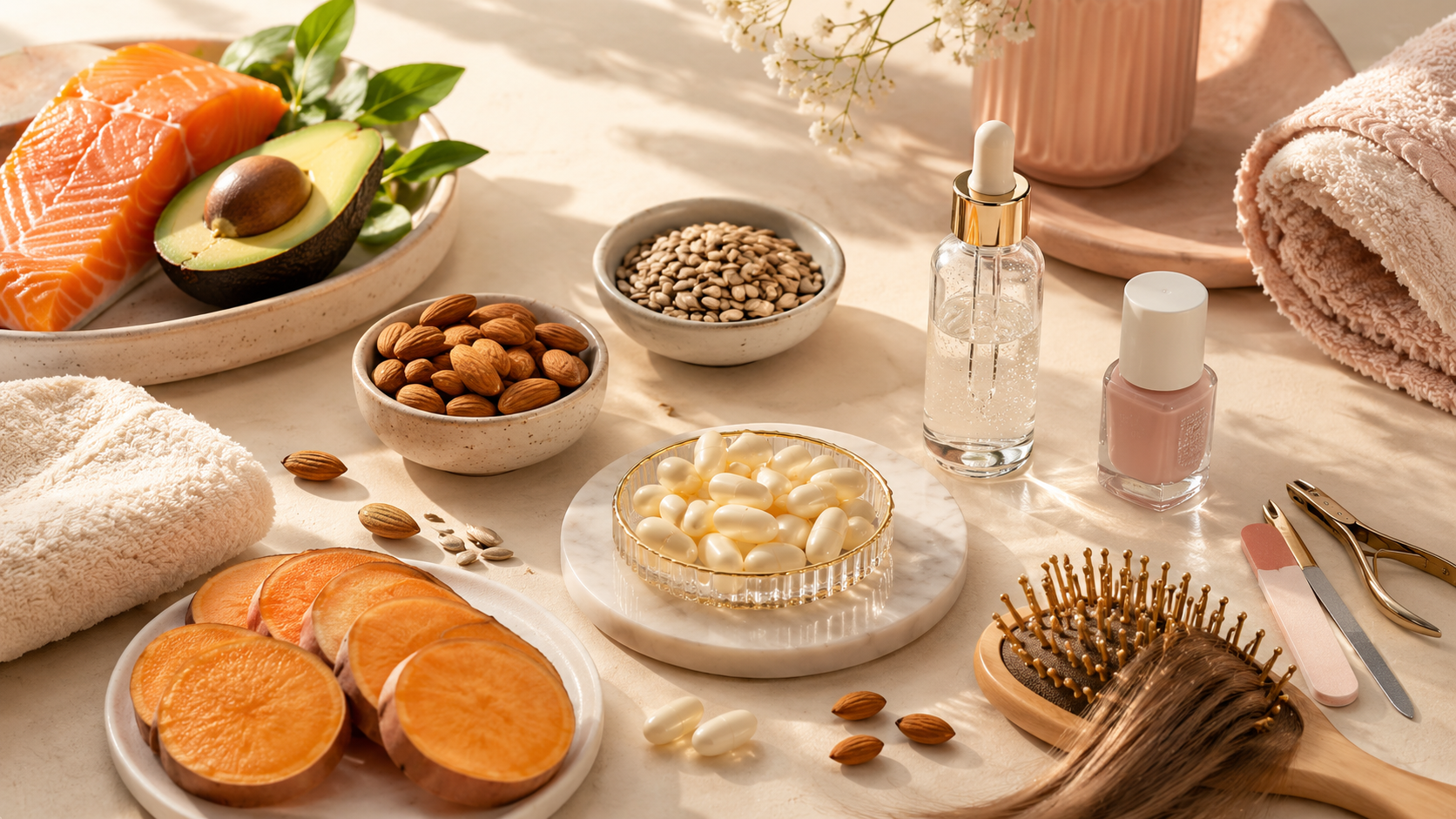
Biotin-rich foods include:
Egg yolks
Liver and organ meats
Salmon
Pork
Sunflower seeds
Almonds
Walnuts
Sweet potatoes
Spinach
Broccoli
Whole grains
Legumes
A balanced diet usually provides enough biotin for most healthy people. Since biotin is present in many foods, deficiency is rare unless there is a specific risk factor.
How Much Biotin Do Adults Need?
There is no official Recommended Dietary Allowance for biotin because there is not enough evidence to set one. Instead, an Adequate Intake level is used.
The NIH lists the Adequate Intake for adults as 30 micrograms per day, and 35 micrograms per day during breastfeeding.
Many hair, skin, and nail supplements contain much higher amounts, sometimes thousands of micrograms per serving. Higher does not always mean better, especially when deficiency is not present.
The Big Safety Issue: Biotin and Lab Tests
One of the most important things to know about biotin is that it can interfere with some laboratory tests.
The FDA warns that biotin, which is often found in dietary supplements, can significantly interfere with certain lab tests and may cause incorrect results that go undetected. This includes troponin tests, which are used to help diagnose heart attacks.
Biotin interference has also been reported with thyroid tests and other hormone-related tests. A clinical review notes that biotin supplementation can skew a wide variety of lab tests, including troponin, thyroid, parathyroid, and electrolyte assays.
This is especially important for women because thyroid testing, pregnancy-related testing, hormone testing, and vitamin D testing may be part of routine care.
If you take biotin, always tell your doctor, pharmacist, and laboratory team before having blood tests.
Should You Stop Biotin Before Blood Tests?
Do not stop any supplement or medication without asking a healthcare professional, but it is important to inform the clinic or lab that you are taking biotin.
Some healthcare professionals may ask patients to stop biotin for a period before testing, depending on the dose and the type of test. The safest step is to tell them exactly what supplement you take and how much biotin it contains.
This is especially important before thyroid tests, heart-related tests, hormone tests, pregnancy tests, or vitamin D tests.
Who Might Benefit from Biotin Supplements?
Biotin supplements may be useful for people who have a confirmed deficiency or a medical condition that affects biotin metabolism or absorption.
They may also be considered in some cases of brittle nails, but expectations should be realistic because the research is limited.
A person may be more likely to benefit if there is:
Confirmed biotin deficiency
A medical reason for poor absorption
A rare inherited biotin-related condition
Brittle nails with professional guidance
A diet or health history that suggests possible deficiency
For general “beauty support,” biotin is often less impressive than marketing suggests.
Who Should Be Careful with Biotin?
People should be careful with biotin if they:
Have upcoming blood tests
Take high-dose hair, skin, and nails supplements
Are being monitored for thyroid disease
Are being evaluated for heart symptoms
Are pregnant or trying to conceive
Have cancer follow-up tests or hormone monitoring
Take multiple supplements at once
Biotin is generally considered safe at normal intake levels, but high-dose supplements can create confusion in medical testing.
Biotin Shampoo: Does It Work?
Biotin shampoos are popular, but they are unlikely to dramatically change hair growth.
Hair growth happens at the follicle level inside the scalp. A shampoo is rinsed off quickly, so it has limited time to affect the follicle. A biotin shampoo may make hair feel cleaner or fuller depending on the formula, but that does not mean it is regrowing hair.
For true hair loss, it is better to understand the cause rather than rely only on topical cosmetic products.
Final Thoughts
Biotin is an essential vitamin, but it is not a miracle beauty supplement.
For people with true deficiency, biotin can make a real difference. For people without deficiency, the benefits for hair growth, skin glow, and nail strength are much less clear.
The biggest point many people miss is safety: high-dose biotin can interfere with important blood tests, including thyroid and heart-related tests. That does not mean biotin is dangerous for everyone, but it does mean it should be used thoughtfully.
For ILAYA, the balanced message is simple: biotin may help when there is a real need, but healthy hair, skin, and nails require more than one supplement.
FAQ
1. Does biotin really help hair grow?
Biotin may help hair growth if a person has biotin deficiency. In people without deficiency, there is not enough strong evidence that biotin makes hair grow faster or thicker.
2. Is biotin good for nails?
Biotin may help some people with brittle nails, but the evidence is limited and based on small studies. Nail health also depends on hydration, trauma, nail-care habits, thyroid health, and nutrition.
3. Can biotin improve skin?
Biotin deficiency can cause skin problems, but extra biotin does not automatically improve skin in people with normal biotin levels.
4. What foods contain biotin?
Biotin is found in egg yolks, liver, salmon, pork, nuts, seeds, sweet potatoes, spinach, broccoli, whole grains, and legumes.
5. Can biotin interfere with blood tests?
Yes. High-dose biotin can interfere with certain lab tests, including thyroid and troponin tests. Always tell your doctor or lab if you take biotin supplements.
6. How much biotin do adults need daily?
The Adequate Intake for adults is 30 micrograms per day, according to the NIH. Many beauty supplements contain much higher amounts, which may not be necessary for most people.
7. Is biotin safe to take every day?
Biotin from food and normal intake is generally safe for most people. High-dose supplements should be used carefully, especially before blood tests or if you are being monitored for thyroid, heart, hormone, or pregnancy-related conditions.
References
- NIH Office of Dietary Supplements — Biotin Health Professional Fact Sheet.
- FDA — Biotin Interference with Troponin Lab Tests.
- Almohanna HM et al. The Role of Vitamins and Minerals in Hair Loss: A Review.
- Patel DP et al. A Review of the Use of Biotin for Hair Loss.
- Rosner I et al. Clinically Significant Lab Errors due to Vitamin B7 Supplementation.
- Yelich A et al. Biotin for Hair Loss: Teasing Out the Evidence.
About the Author
Dr. Suleiman Atieh is a pharmacist and founder of إلَيَّ, with a strong passion for healthcare marketing, brand strategy, and business development. He focuses on building meaningful healthcare brands that connect science, market needs, and modern communication.
Dr. Suleiman Atieh
Founder