

Spearmint Tea for PMOS: Can It Support Hormonal Balance Naturally?
- July 1, 2026
- Herbals & Natural Health
Spearmint tea may look like a simple herbal drink, but in women’s wellness, it has gained attention for one very specific reason: its possible role in supporting hormonal balance in PMOS.
PMOS, formerly known as PCOS, stands for Polyendocrine Metabolic Ovarian Syndrome. The new name better reflects that this condition is not only about ovarian “cysts,” but also about hormones, metabolism, skin, reproductive health, and long-term wellbeing. The Endocrine Society announced the name change in May 2026, describing PMOS as a condition that affects weight, metabolic health, mental health, skin, hormones, and the reproductive system.
One of the most discussed herbal options for PMOS is spearmint tea. But can it really help? And should it be part of a daily routine?
Let’s look at what science says.

Dr. Suleiman Atieh
Founder
Dr. Suleiman Atieh is a pharmacist and founder of إلَيَّ, with a strong passion for healthcare marketing, brand strategy, and business development. He focuses on building meaningful healthcare brands that connect science, market needs, and modern communication.
Reviewed by Celine Abdallah
Last updated: June 06, 2026
Table of Contents
This article is for educational purposes only and is not a substitute for professional medical advice.
What Is Spearmint Tea?
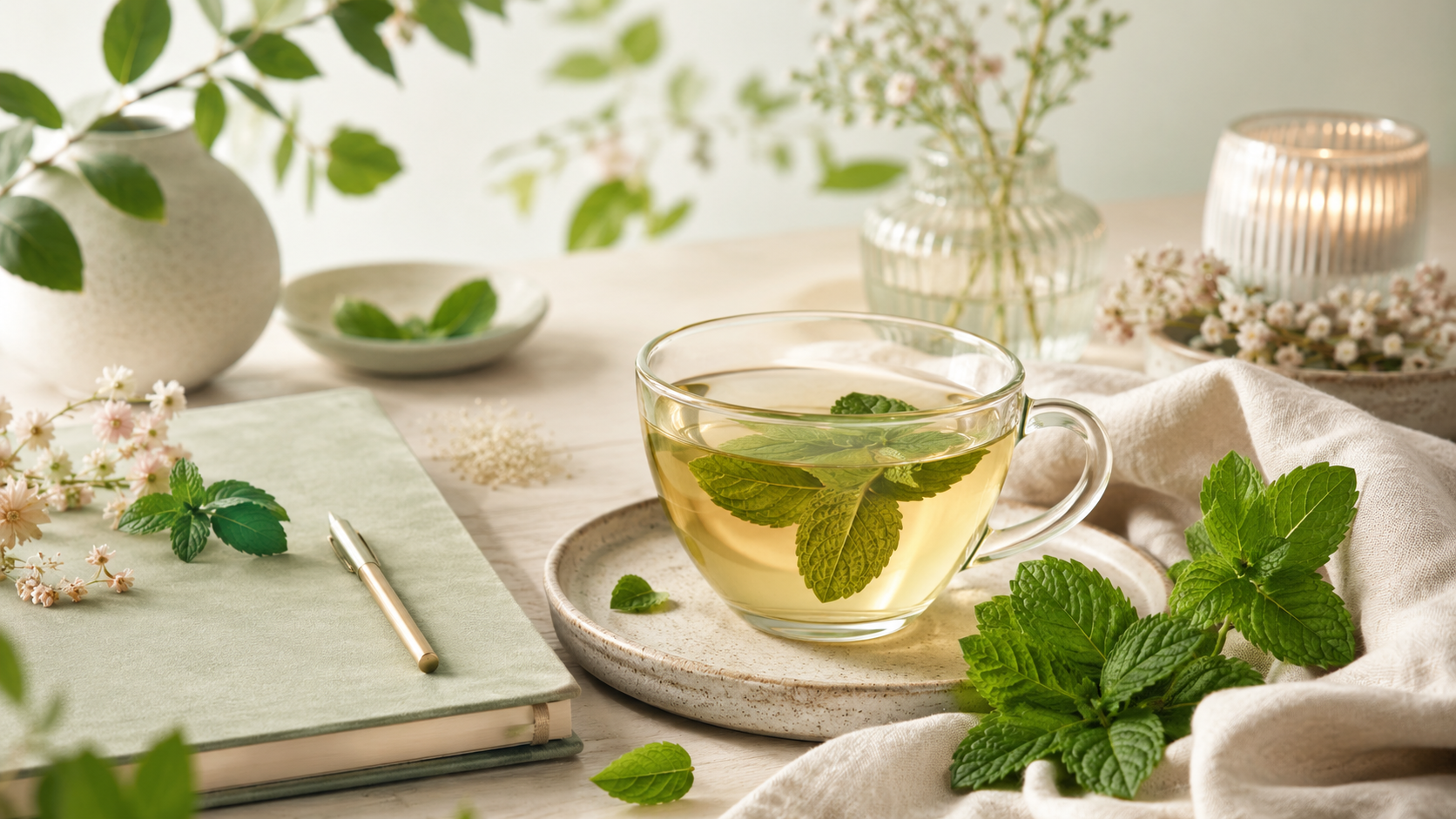
Spearmint tea is an herbal infusion made from the leaves of the spearmint plant, known scientifically as Mentha spicata. It is naturally caffeine-free, refreshing, and commonly used after meals or as a calming daily drink.
Unlike peppermint, which has a sharper cooling taste, spearmint has a softer, slightly sweet flavor. This makes it easy to drink regularly, especially for people who want a gentle herbal tea without caffeine.
In wellness conversations, spearmint is often linked to digestion, relaxation, and hormone-related symptoms. For PMOS specifically, the main interest is its possible anti-androgen effect.
Why Hormonal Balance Matters in PMOS
PMOS is commonly linked with higher androgen levels. Androgens are hormones such as testosterone that are present in everyone, but when they are elevated in women, they may contribute to symptoms such as acne, oily skin, unwanted facial or body hair, scalp hair thinning, and irregular periods.
According to ACOG, common signs of PCOS include irregular menstrual periods, infertility, obesity, and excess hair growth, also known as hirsutism, which affects more than 7 in 10 women with the condition.
This is where spearmint tea becomes interesting: early studies suggest that it may help reduce free and total testosterone levels in women with hirsutism and PCOS/PMOS.
What Does Science Say About Spearmint Tea for PMOS?
The most cited study on this topic is a randomized controlled trial published in Phytotherapy Research. In this study, spearmint herbal tea was associated with significant reductions in free and total testosterone over 30 days in women with PCOS. The study also reported changes in LH and FSH, two hormones involved in ovulation and reproductive function.
Another earlier study found that spearmint tea consumption was linked with a significant decrease in free testosterone and an increase in luteinizing hormone and follicle-stimulating hormone in women with hirsutism.
These findings are promising, especially for women dealing with androgen-related symptoms. However, the evidence is still limited. The studies were small and short-term, so spearmint tea should not be presented as a treatment or cure for PMOS. It is better understood as a possible supportive habit within a wider health plan.
Can Spearmint Tea Help with Unwanted Hair Growth?
Unwanted facial or body hair, also called hirsutism, is one of the most frustrating symptoms associated with high androgen levels in PMOS.
Spearmint tea may help because of its possible anti-androgen effect. In the 30-day randomized trial, hormone levels improved, but visible hair growth changes may take longer because hair growth follows a slow cycle.
This means spearmint tea may support the hormonal side of the issue, but visible improvements in hair growth would not be expected overnight. For many people, hair-related symptoms take months to change, even with medical treatments.
Can Spearmint Tea Help with Acne?
PMOS-related acne is often connected to androgen activity. Higher androgen levels can increase sebum production, which may contribute to clogged pores and breakouts.
Because spearmint tea may help reduce testosterone levels, it is sometimes discussed as a natural support option for hormonal acne. However, there are not enough direct clinical studies proving that spearmint tea clears acne in PMOS.
A realistic way to explain it is this: spearmint tea may support the hormonal environment linked to acne, but it should not replace a proper skincare routine or medical treatment when acne is moderate, severe, painful, or leaving marks.
How Much Spearmint Tea Is Usually Used?
In clinical studies, spearmint tea was commonly consumed twice daily. One study reported the use of spearmint tea twice a day for five days during the follicular phase of the menstrual cycle, while the 30-day PCOS study also used regular daily intake.
A practical routine may look like:
1 cup in the morning
1 cup in the evening
For a simple homemade preparation, steep dried spearmint leaves in hot water for 5–10 minutes, then drink warm or cold.
It is better to start gently and observe how the body responds.
Who Should Be Careful with Spearmint Tea?
Spearmint tea is generally considered low-risk when consumed in moderate food-like amounts, but herbal products are not suitable for everyone.
People who are pregnant, breastfeeding, taking regular medication, or living with liver or kidney conditions should ask a healthcare professional before using spearmint in high amounts. Information from NCCIH on mint safety notes that peppermint tea appears safe, but the long-term safety of consuming large amounts of mint leaves is unknown, and medicinal amounts during pregnancy or breastfeeding are not well studied.
People with acid reflux or GERD may also want to be careful, as mint products can worsen heartburn or reflux symptoms in some individuals. NCCIH notes that peppermint oil may cause side effects such as heartburn, nausea, abdominal pain, and dry mouth.
Spearmint Tea Is Not a PMOS Treatment
This is important: spearmint tea is not a cure for PMOS.
PMOS is a complex hormonal and metabolic condition. The 2023 International Evidence-based Guideline for PCOS was designed to support shared decision-making and improve care outcomes, highlighting that management should be evidence-based and individualized.
For many women, PMOS management may include nutrition changes, physical activity, sleep support, stress management, skin care, cycle tracking, blood tests, and sometimes medications prescribed by a doctor.
Spearmint tea can be part of a wellness routine, but it should not replace diagnosis, medical follow-up, or prescribed treatment.
How to Add Spearmint Tea to a PMOS-Friendly Routine
Spearmint tea works best when it is treated as one small supportive habit, not a magic solution.
You can pair it with:
A balanced breakfast rich in protein and fiber
Regular movement, such as walking or strength training
A consistent sleep routine
Lower-sugar snacks when possible
Gentle skincare for acne-prone skin
Regular follow-up with a gynecologist or endocrinologist
The goal is not perfection. The goal is creating a routine that supports hormones, metabolism, skin, and energy in a realistic way.
Final Thoughts
Spearmint tea is one of the most interesting herbs discussed for PMOS because early research suggests it may help reduce androgen levels, especially testosterone. This may be relevant for symptoms such as unwanted hair growth, oily skin, and hormonal acne.
Still, the evidence is limited, and PMOS is much bigger than one hormone or one symptom. Spearmint tea may be a gentle, caffeine-free addition to a daily routine, but it should be used as supportive wellness care, not as a replacement for medical advice.
For women with PMOS, the best approach is always a complete one: science-based care, realistic lifestyle habits, and gentle support for the body.
FAQ
1. Is spearmint tea good for PMOS?
Spearmint tea may be helpful as a supportive habit for some women with PMOS because small studies suggest it may reduce free and total testosterone levels. However, it is not a cure or medical treatment.
2. How many cups of spearmint tea should I drink for PMOS?
Studies commonly used spearmint tea twice daily. A practical routine is one cup in the morning and one cup in the evening, but anyone who is pregnant, breastfeeding, taking medication, or has a health condition should ask a healthcare professional first.
3. Can spearmint tea reduce facial hair?
Spearmint tea may support lower androgen levels, which are linked to unwanted hair growth. However, visible changes in facial or body hair usually take time, and more research is needed.
4. Does spearmint tea help hormonal acne?
Spearmint tea may support hormone-related acne indirectly by influencing androgen levels, but there is not enough evidence to say it treats acne. Moderate or severe acne should be assessed by a dermatologist.
5. Is spearmint tea safe every day?
For many people, moderate spearmint tea intake is well tolerated. However, large amounts may not be suitable for everyone, especially during pregnancy, breastfeeding, reflux, liver or kidney disease, or when taking medications.
References
- Endocrine Society — PCOS renamed Polyendocrine Metabolic Ovarian Syndrome, May 2026.
- ACOG — Polycystic Ovary Syndrome symptoms and overview.
- Grant P. Spearmint herbal tea and anti-androgen effects in PCOS, Phytotherapy Research.
- Akdoğan M. et al. Effect of spearmint tea on androgen levels in women with hirsutism.
- RCOG — 2023 International Evidence-based Guideline for PCOS.
- NCCIH — Mint safety considerations and herbal product guidance.
About the Author
Dr. Suleiman Atieh is a pharmacist and founder of إلَيَّ, with a strong passion for healthcare marketing, brand strategy, and business development. He focuses on building meaningful healthcare brands that connect science, market needs, and modern communication.
Dr. Suleiman Atieh
Founder