

Traditional Bath Loofah: Soft Skin or a Bacteria Bomb?
- June 28, 2026
- Women’s Health
The traditional bath loofah is one of the most common tools used for exfoliating the skin and helping the body feel clean during a shower. Because we see it almost everywhere while shopping, it may give the impression that it is one of the best shower tools to use.
But research suggests the opposite.

Dr. Zena Kalaji
Writer
A dentistry student and wellness writer focused on how everyday preventive habits impact confidence and health.
Reviewed by Dr. Suleiman Atieh
Last updated: June 28, 2026
Table of Contents
This article is for educational purposes only and is not a substitute for professional medical advice.
Why Can a Traditional Loofah Collect Bacteria?
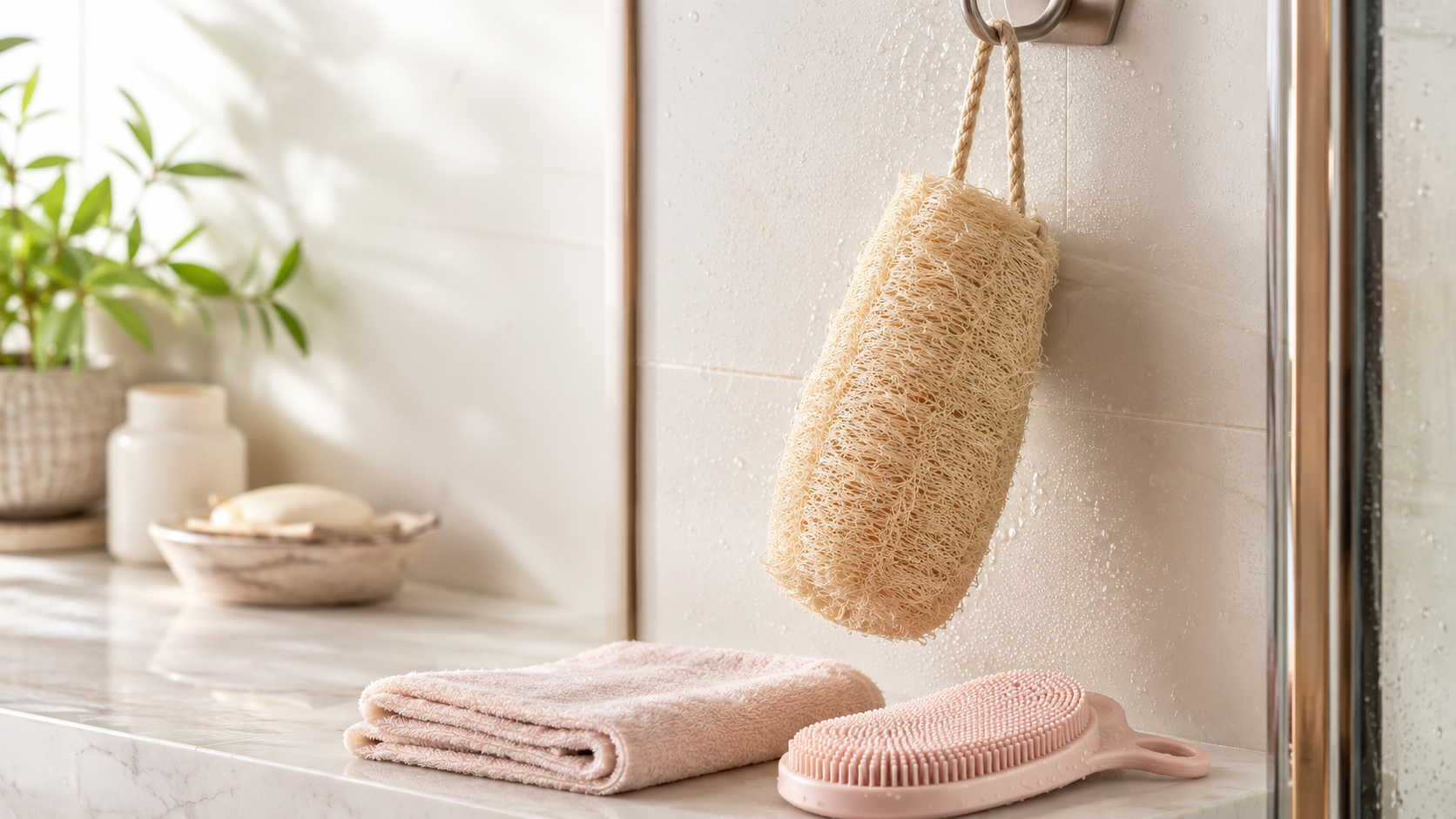
A traditional bath loofah has a porous structure and many small fibers. This makes it easier for bacteria to attach to it and stay inside its layers.
Several other factors can also help bacteria grow:
- Dead skin cells can remain trapped inside the loofah, giving bacteria something to feed on.
- The design of the loofah makes it dry slowly after use.
- The bathroom environment is usually warm and humid, which can encourage bacterial growth.
Over time, these factors may turn the loofah into a suitable place for bacteria to multiply. This can make it less suitable for exfoliating the skin, especially when it is not cleaned or replaced regularly.
Studies have also shown that bacteria growing on bath loofahs may contribute to skin problems such as folliculitis, which is inflammation around the hair follicles.
What Are the Best Alternatives?
1. Silicone Body Scrubber
A silicone body scrubber is one of the best healthier alternatives to a traditional loofah.
Silicone is non-porous, which means it does not absorb water or trap dead skin cells in the same way a traditional loofah does. It also dries within minutes and can be washed with hot water or cleaned more easily.
A silicone scrubber can help clean the skin and gently remove dead skin cells without causing harsh scratches. This makes it a suitable option for many people, including those with sensitive skin.
It is also long-lasting compared to traditional loofahs.
2. Cotton or Moroccan Bath Glove
A cotton or Moroccan-style bath glove can be another good option because it is easier to wash and clean. It also dries faster than many traditional loofahs when stored properly.
However, it should still be washed regularly and allowed to dry completely between uses.
3. Small Washcloth
A small washcloth is simple, practical, and easy to clean. It can be washed in the washing machine and sanitized at higher temperatures, making it a more hygienic option when used properly.
Using a fresh washcloth regularly can help reduce the buildup of bacteria.
4. Your Hands
Sometimes, your hands are enough.
If your skin does not need exfoliation, washing your body with your hands and a gentle cleanser can be a simple and safe option, especially for sensitive skin or areas that are easily irritated.
How Can You Reduce Bacteria in a Traditional Loofah?
Experts generally recommend replacing traditional loofahs with more hygienic alternatives. However, if you still prefer using one, these steps may help reduce the chance of bacterial buildup and skin irritation:
- Replace the traditional loofah every 3 to 4 weeks.
- Squeeze it well after every shower and place it in a cool, dry area to help it dry faster.
- Avoid using it right after shaving.
- Do not use it on the face or sensitive areas.
- Soak it once a week in a diluted bleach solution for about 5 minutes, then rinse it well and allow it to dry completely.
Final Thoughts
A traditional bath loofah may seem like a simple tool for cleaner, smoother skin, but its porous design and slow drying time can make it a place where bacteria grow easily.
For a healthier shower routine, a silicone body scrubber, clean washcloth, or even your hands may be better options. If you still use a traditional loofah, make sure to clean it, dry it properly, and replace it regularly.
Small changes in your shower routine can make a big difference in keeping your skin clean, comfortable, and healthy.
FAQ
1. Can a traditional bath loofah grow bacteria?
Yes. Traditional bath loofahs can collect bacteria because they are porous, stay wet for a long time, and may trap dead skin cells after showering.
2. Is it bad to use a bath loofah every day?
Using a dirty or poorly dried loofah every day may irritate the skin and increase the risk of folliculitis, especially if it is used too aggressively or after shaving.
3. What is the best alternative to a traditional loofah?
A silicone body scrubber is one of the best alternatives because it is non-porous, dries quickly, and is easier to clean than a traditional loofah.
4. How often should I replace my traditional bath loofah?
It is recommended to replace a traditional loofah every 3 to 4 weeks, especially if you use it regularly.
5. Can I use a traditional bath loofah on my face?
It is better to avoid using a traditional loofah on the face or sensitive areas because it may be too harsh and may transfer bacteria to delicate skin.
References
[1] Bottone, E. J., & Perez, A. A. (1993). Pseudomonas aeruginosa folliculitis acquired through use of a contaminated loofah sponge: an unrecognized potential public health problem. Journal of Clinical Microbiology, 31(3), 480–483. DOI: 10.1128/JCM.31.3.480-483.1993.
[2] Bottone, E. J., Perez, A. A., & Oeser, J. L. (1994). Loofah sponges as reservoirs and vehicles in the transmission of potentially pathogenic bacterial species to human skin. Journal of Clinical Microbiology, 32(2), 469–472. DOI: 10.1128/JCM.32.2.469-472.1994.
[3] Frenkel, L. M. (1993). Pseudomonas folliculitis from sponges promoted as beauty aids. Journal of Clinical Microbiology, 31(10), 2838. DOI: 10.1128/JCM.31.10.2838-.1993.
About the Author
A dentistry student and wellness writer focused on how everyday preventive habits impact confidence and health.
Dr. Zena Kalaji
Writer